
Imagine waking up each day with a sense of calm and clarity, ready to face whatever comes your way. Living mindfully can transform your daily routine into a meaningful experience, where every moment is cherished. This guide dives into the art of mindfulness, from establishing intentional morning habits and savoring meals to integrating awareness into your work and relationships. Plus, we’ll tackle common distractions and stressors head-on. Ready to embrace a more aware lifestyle? Let’s explore together!
What is Mindfulness?

Mindfulness is an awareness practice that has its roots in ancient meditation traditions, characterized by the ability to focus attention on the present moment without judgment. It emphasizes an awareness of one’s thoughts, feelings, and bodily sensations, promoting emotional regulation and mental clarity.
While many people mistakenly believe that mindfulness is solely about meditation, it can actually be integrated into various daily activities. For example, one can practice mindfulness while eating by truly savoring each bite or while walking by paying attention to each step taken.
There are also helpful tools available, such as apps like Headspace or Calm, which offer guided exercises to make it easier to incorporate mindfulness into your daily routine.
Ultimately, mindfulness enhances overall well-being by fostering a deeper connection to one’s experiences.
Benefits of Mindful Living
Practicing mindfulness can yield measurable benefits, such as a 40% reduction in stress levels and improved emotional regulation over time. To effectively incorporate mindfulness into your daily routine, consider these specific practices.
- Begin with deep breathing exercises: inhale deeply for a count of four, hold for four, and then exhale for six. These relaxation techniques can easily fit into your day, whether during breaks at work or before meals.
- Additionally, utilizing apps like Headspace or Calm can offer guided meditation sessions tailored to your individual needs.
Research indicates that dedicating just 10 minutes each day to mindfulness training can significantly enhance focus, emotional stability, and emotional balance, ultimately leading to a more balanced life.
Establishing Mindful Habits
Establishing mindful habits entails incorporating small but meaningful practices into your daily routine, setting the groundwork for a more present and intentional approach to conscious living.
Creating a Morning Routine
A mindful morning routine can truly establish a positive tone for the entire day. Incorporating practices such as gratitude journaling and brief meditation sessions can make a significant difference. To create an effective morning routine, consider the following actionable steps:
- Start by waking up 15 minutes earlier than usual, allowing yourself some quiet time to focus.
- Next, engage in mindfulness meditation using apps like Headspace or Calm. They offer guided sessions for around $12.99 per month, which can be quite helpful.
- After your meditation, take a few moments to write in a gratitude journal, such as The Five-Minute Journal, to foster a positive mindset.
- To ensure you stick with this new routine, set reminders on your phone and gradually adjust your wake-up time to align with your new schedule.
Mindful Eating Practices
Mindful eating emphasizes the overall experience of eating by enhancing sensory awareness and recognizing emotional responses during meals, ultimately leading to improved digestion, greater satisfaction, and a more well-rounded lifestyle.
To begin practicing mindful eating, consider chewing each bite at least 20 times. This simple adjustment slows down the eating process, allowing for better digestion and a more profound appreciation of flavors.
Additionally, it is beneficial to eliminate distractions. By putting away your phone and turning off the television, you can concentrate entirely on your meal.
Another effective strategy is to use smaller plates. This straightforward technique can help control portion sizes and reduce the chances of overeating.
Research published in the Journal of Nutrition indicates that these mindful eating practices contribute to increased enjoyment of meals and can promote healthier eating habits.
Mindfulness in Daily Activities
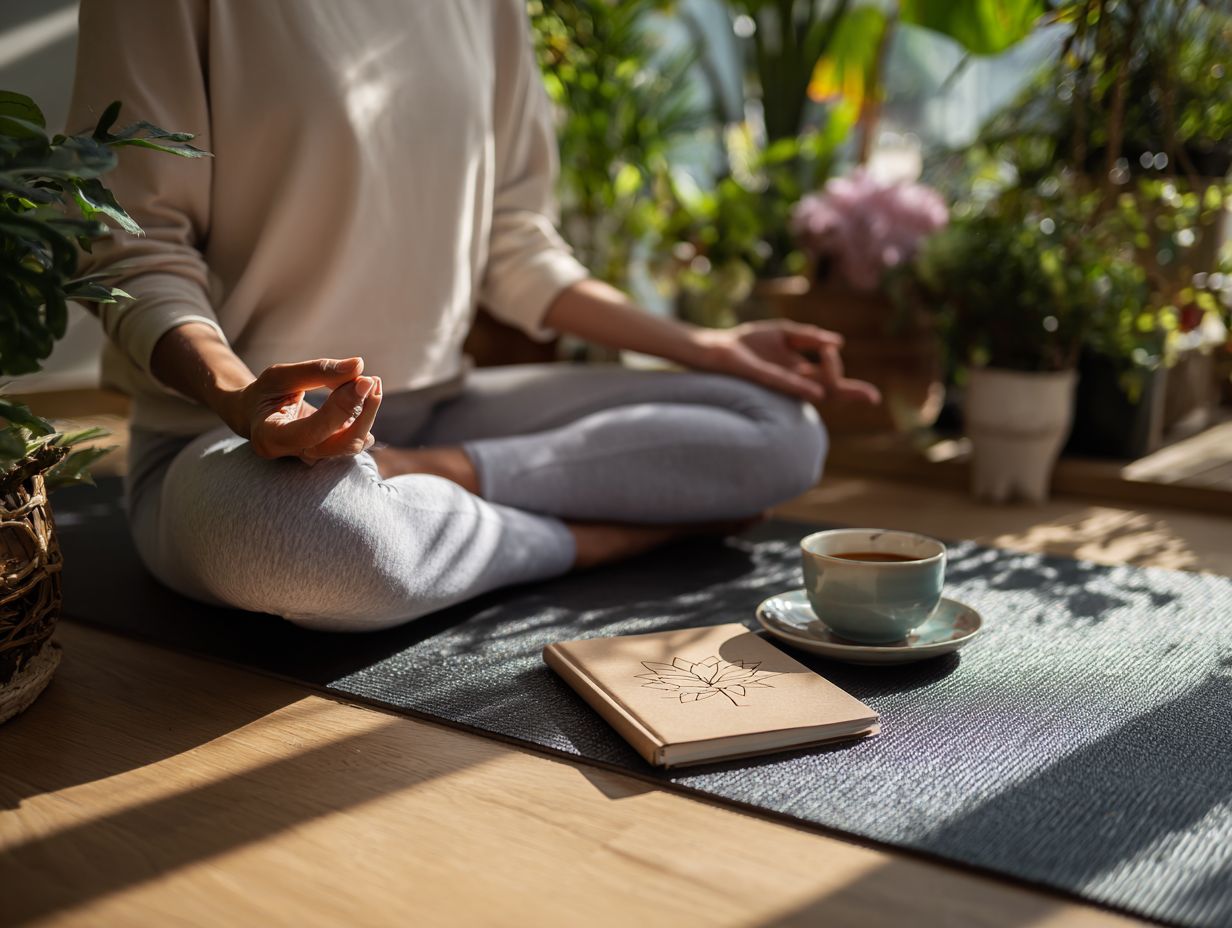
Integrating mindfulness into daily activities can truly transform what might seem like mundane tasks into enriching experiences.
It fosters a greater sense of awareness and connection, positively impacting all areas of life.
Incorporating Mindfulness into Work
Incorporating mindfulness into the workplace can be achieved through various techniques, one of which is the Pomodoro Technique. This method encourages focused work intervals followed by brief mindfulness breaks.
To implement this effectively, begin by setting a timer for 25 minutes, during which you will concentrate solely on your tasks. Once this interval concludes, take a 5-minute mindfulness break. During this time, engage in deep breathing, gentle stretching, or even a short meditation session to rejuvenate your mind.
Ultimately, it is beneficial to reflect on your accomplishments. This practice not only reinforces a sense of achievement but also serves to motivate your focus for the following day.
Additionally, you might consider utilizing apps like Mindfulness at Work or Headspace to help track your sessions and remind you to take those much-needed pauses throughout your day.
Mindfulness in Relationships
Practicing mindfulness in relationships involves engaging in active listening and empathetic communication, both of which can significantly enhance the emotional connection between partners.
To deepen this connection, it is beneficial to incorporate specific strategies.
- Begin with active listening: fully focus on your partner while they speak, and then paraphrase their words to ensure accurate understanding. This approach not only validates their feelings but also improves clarity in communication.
- Next, respond in a non-judgmental manner. Instead of reacting defensively, consider asking open-ended questions that encourage further dialogue.
- It can also be helpful to schedule regular check-ins, ideally on a weekly basis, during which both partners can express their thoughts and feelings without any interruptions.
Research indicates that couples who utilize these techniques report a 50% increase in relationship satisfaction, underscoring the importance of mindfulness in fostering and maintaining healthy connections.
Overcoming Challenges with Resilience
Despite its numerous benefits, many individuals encounter difficulties in maintaining mindfulness amid the daily distractions and stressors of life.
Dealing with Distractions
To address distractions, individuals can adopt effective strategies such as the ‘5-4-3-2-1’ grounding technique. This approach encourages a reconnection with the present moment through sensory awareness.
Another practical method involves using app timers, like Forest, which gamifies focus by helping to limit phone usage. Additionally, establishing a designated quiet workspace that is free from clutter and noise can significantly enhance concentration.
For example, one user named Sarah implemented a daily ‘focus hour’ by reserving the first hour of her workday for uninterrupted tasks. This simple practice resulted in a remarkable 50% increase in her productivity.
By combining these strategies, anyone can improve their focus and effectively manage distractions.
Managing Stress Mindfully

Mindful stress management techniques can effectively reduce perceived stress levels by as much as 25%. Practices such as deep breathing and guided imagery play a significant role in this process.
Incorporating specific exercises into your stress management routine can greatly enhance its effectiveness. One particularly effective method is the 4-7-8 breathing technique: inhale deeply for 4 seconds, hold your breath for 7 seconds, and then exhale slowly for 8 seconds.
Additionally, visualization exercises, in which you imagine a serene beach or a peaceful forest, can help calm the mind. It is beneficial to practice this for about 10 minutes each day.
You might also consider attending local mindfulness retreats, which often provide hands-on workshops. By integrating these practices into your life, you can develop a more resilient approach to daily stressors, ultimately leading to improved mental well-being.
Deepening Your Practice
To deepen one’s mindfulness practice, it is important to explore a variety of techniques and engage in continuous learning through the resources available both in the community and online.
Mindfulness Meditation Techniques
Popular mindfulness meditation techniques include body scan, loving-kindness meditation, and breath awareness, each offering distinct benefits for enhancing mental clarity and emotional regulation.
To practice body scan meditation, it’s advisable to find a quiet space and spend approximately 15 minutes mentally focusing on each area of your body, taking note of any tension that may arise.
For loving-kindness meditation, you can dedicate 5 to 10 minutes to silently repeating phrases such as “May I be happy, may I be healthy,” while visualizing your loved ones.
Breath awareness, in contrast, involves concentrating on your breath for a few minutes and gently guiding your focus back whenever distractions occur.
To enhance your practice and maintain your motivation, you can easily find guided sessions on YouTube that cater to your needs.
Resources for Continued Learning
To enhance your mindfulness journey and adopt positive habits, it is beneficial to utilize resources such as the Headspace app, Jon Kabat-Zinn’s book, *Wherever You Go, There You Are*, and local mindfulness workshops.
Additionally, consider exploring community resources like Insight Timer, which offers a wide range of free guided meditations. You may also find *The Miracle of Mindfulness* by Thich Nhat Hanh to be a valuable read, as it includes practical exercises.
For those interested in structured learning, online courses on platforms like Coursera provide accessible mindfulness practices, including breathing techniques and grounding techniques, for approximately $49.
These diverse options can help deepen your practice and encourage regular engagement, ultimately leading to a more fulfilling mindfulness experience with greater presence of mind and inner peace.
Embracing a Mindful Lifestyle with Positive Psychology
Adopting mindfulness as a way of life entails making intentional daily choices that cultivate resilience while promoting holistic health, self-care, and well-being.
To weave mindfulness into your routine, begin by setting daily intentions each morning. This practice focuses on specific goals or approaches you’d like to embrace throughout the day, enhancing your clarity and sense of purpose.
In the evening, consider engaging in reflective journaling. By writing about your thoughts and feelings, you can gain valuable insights and experience emotional release.
Additionally, participating in community mindfulness events or workshops can foster connection and shared experiences. Research indicates that these practices effectively reduce stress and improve mental health, serving as powerful tools for cultivating a more mindful life.
Frequently Asked Questions

What is mindful daily living?
Mindful daily living, also known as living with awareness, is the practice of being fully present and engaged in each moment of your daily life. It involves paying attention to your thoughts, emotions, and surroundings without judgment, and being aware of your actions and their impact on yourself and others.
How can living with awareness improve my life?
Living with awareness can improve your life in many ways, including reducing stress and anxiety, increasing self-awareness and self-compassion, improving relationships and communication, and promoting overall well-being and fulfillment. It can also help you appreciate and find joy in the small moments of your daily life.
What are some examples of mindful daily habits?
Mindful daily habits can include practices such as meditation, mindful breathing, mindful eating, journaling, and mindful movement, like yoga or walking. It can also involve being fully present and engaged in daily tasks, such as cooking, cleaning, or spending time with loved ones.
How can I incorporate mindful daily habits into my routine?
You can start by setting aside a few minutes each day to practice a mindful habit, such as meditation or deep breathing. You can also try to be more present and engaged in your daily activities, and set reminders for yourself to check in with your thoughts and emotions throughout the day. Gradually, these habits will become second nature to you and you can incorporate them into your routine more seamlessly.
What are the benefits of practicing mindfulness in daily life?
Some benefits of practicing mindfulness in daily life include reducing stress and anxiety, improving focus and productivity, enhancing self-awareness and self-compassion, and promoting overall well-being and happiness. It can also help you cultivate a deeper understanding of yourself and others, leading to more fulfilling and meaningful relationships.
Is living with awareness a difficult practice to incorporate into my life?
Living with awareness may seem daunting at first, but it is a practice that can be incorporated into your daily life with patience and consistency. It may take some time to fully embrace the habit, but with dedication and an open mind, it can become a natural and rewarding part of your daily routine.