
Imagine finding tranquility not through stillness, but with every step you take. Walking meditation invites you to blend movement and mindfulness, creating a harmonious escape from life’s chaos, enabling a spiritual journey toward inner calm. This practice not only enhances your mental clarity but also promotes physical well-being and emotional wellness. We’ll explore how to prepare your environment, set meaningful intentions, and overcome common obstacles. Are you ready to transform your walk into a pathway of peace? Let’s dive in!
Definition and Purpose

Walking meditation is a practice that can be described as meditation in motion, where the emphasis is placed on the act of walking while remaining aware of the body and breath. This approach has its origins in various spiritual traditions, notably Buddhism and Taoism, where mindful movement helps cultivate a connection to both the physical world and one’s internal state.
To get started, select a quiet space and establish a slow, intentional pace. As you walk, focus on each step-notice the sensation of the ground beneath your feet while synchronizing your breath with your movements, a grounding technique for present moment awareness.
Many individuals find that setting a timer for 10 to 20 minutes aids in maintaining focus, allowing for a more profound experience of mindfulness, presence, and tranquility.
Benefits of Walking Meditation
Engaging in walking meditation can be quite beneficial, as it has the potential to reduce stress levels by up to 50% while simultaneously enhancing mental clarity, providing a comprehensive advantage for both physical and mental well-being.
To practice walking meditation effectively, it is advisable to begin by selecting a quiet location, such as a park or a garden, to enhance your connection with nature. Start by walking slowly, paying close attention to the sensation of each foot making contact with the ground. Aim for a duration of 10 to 20 minutes daily.
Utilizing a timer or an app like Insight Timer can help you keep track of your practice without distractions.
Additionally, consider pairing this practice with deep breathing techniques by inhaling for four steps and exhaling for four steps, promoting rhythmic breathing and relaxation. This combination can further enhance relaxation. Consistency is essential, so it may be helpful to establish a routine by walking at the same time each day.
Preparing for Your Walking Meditation
Proper preparation for walking meditation is crucial in establishing an environment and mindset that are conducive to a meaningful practice every time, fostering mindfulness and tranquility.
Taking the time to set the stage can greatly enhance the overall experience and effectiveness of the meditation.
Choosing the Right Environment
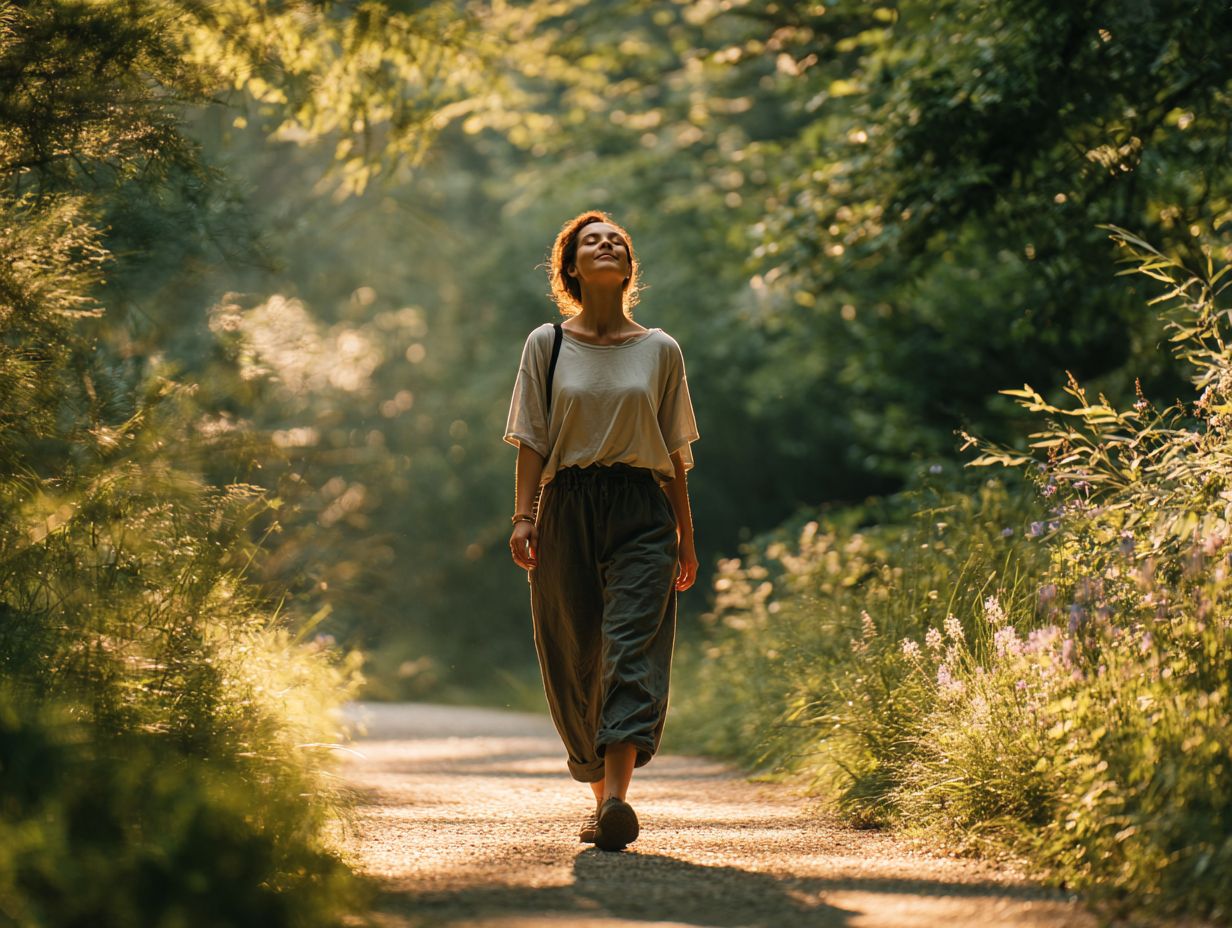
Selecting the right environment, such as a quiet park or a nature trail, can significantly enhance your walking meditation experience and deepen your connection with nature, encouraging a sense of peace and serenity.
To make the most of your walking meditation, it is important to choose locations that promote calmness and focus. Consider settings that are away from busy streets, possibly near a tranquil lake or surrounded by a lush forest.
Natural beauty plays a crucial role; scenic views can elevate your mood and foster mindfulness. Utilizing tools like apps designed to help locate nearby parks or trails, such as AllTrails or ParkFinder, can assist you in discovering ideal spots for your practice.
Additionally, consider the time of day you choose for your meditation. Early morning or late afternoon often tends to be quieter, creating a serene atmosphere that is conducive to mindfulness practice.
Setting Your Intention
Setting a clear intention before beginning your walking meditation can significantly enhance your focus and deepen your practice, resulting in a more meaningful experience and clarity of thought.
To establish your intention, you might find it helpful to write it down prior to starting. For instance, you could note, “Today, I seek clarity and peace during my walk.”
Alternatively, articulating your intention verbally can also be effective; simply repeat it to yourself as you take your first steps. Engaging in this practice not only boosts mindfulness but also fosters self-awareness throughout your meditation.
By centering your thoughts on your chosen intention, you will become more attuned to your surroundings and emotions, making each walk more enriching and fulfilling.
Techniques for Practicing Walking Meditation

Engaging in walking meditation encompasses a variety of techniques that seamlessly combine movement with mindfulness, allowing for experiential awareness and self-reflection. This practice enables individuals to deepen their meditative experience and cultivate a greater sense of awareness.
Basic Steps to Follow
To practice walking meditation, one can follow these fundamental steps:
- Begin by standing still, focusing on your breath, and then start walking slowly while maintaining awareness of each step.
- As you walk, it is beneficial to synchronize your movements with your breathing. For instance, you might inhale for four steps and exhale for another four, allowing your mind to anchor itself to this rhythm and develop an embodied awareness.
- It is advisable to aim for a session duration of 10 to 20 minutes initially. Ideally, choose a quiet location that is free from distractions.
- As you become more comfortable with the practice, you may gradually increase your walking pace, all while ensuring that your focus remains on the connection between each step and your breath.
Engaging in this practice not only enhances mindfulness but also fosters a deeper sense of calm throughout the day.
Incorporating Breath Awareness
Incorporating breath awareness into walking meditation significantly enhances the mindfulness experience, creating a harmonious connection between breath and movement, fostering a deeper sense of relaxation and peace.
To begin this practice, you might start by counting your breaths. Inhale for four steps, then exhale for another four. This straightforward counting technique establishes a consistent rhythm that helps to promote focus during your walk.
Alternatively, you could synchronize your breath with the elements of nature-inhale as you step onto grass and exhale when you transition to pavement.
Additionally, utilizing tools such as meditation apps like Headspace or Calm can further enrich your practice by providing timers and ambient sounds.
By experimenting with these techniques, you can deepen your mindfulness while walking, leading to a more fulfilling and enriching experience.
Common Challenges and Solutions
While walking meditation provides a range of benefits, practitioners frequently encounter challenges such as distractions and physical discomfort that can impede their experience.
Overcoming Distractions
To effectively overcome distractions during walking meditation, it’s helpful to refocus your attention on your breath or the sensations in your feet as they connect with the ground, using anchoring techniques to maintain focus.
Plus concentrating on your breath and physical sensations, you might find it beneficial to incorporate visualization techniques. Picture a calming scene, such as a tranquil lake, and mentally transport yourself there. This practice can serve to anchor your thoughts and enhance your experience.
Another practical approach is to minimize external distractions-consider selecting a quieter path for your meditation or wearing noise-cancelling headphones that play gentle nature sounds.
Additionally, setting a timer for your meditation session can be advantageous; having a designated timeframe allows you to resist the temptation of frequently checking your watch or phone.
Dealing with Physical Discomfort
If you find yourself experiencing physical discomfort during walking meditation, it is essential to listen to your body and make the necessary adjustments to your posture or pace. You might consider slowing down your pace to alleviate any strain. It is important to focus on maintaining an upright posture, gently engaging your core, and evenly distributing your weight on both feet.
Incorporating gentle stretches, such as neck rolls and shoulder shrugs, before and after your session can help enhance flexibility. Additionally, choosing a soft surface, like grass or a yoga mat, can provide cushioning for your steps and help minimize discomfort.
Pay attention to how your body responds, and feel free to adjust your environment or routine as needed to create a more comfortable meditation experience, promoting a holistic approach to self-care.
Integrating Walking Meditation into Daily Life
Incorporating walking meditation into one’s daily routine can significantly enhance an overall mindfulness practice. It serves as a powerful tool for managing stress and fostering a sense of calmness.
Creating a Routine
To establish a consistent walking meditation routine, it is advisable to dedicate at least 10 to 15 minutes each day to practice, ideally at a set time. Begin by selecting a time that aligns with your daily schedule, such as early morning or after lunch.
Utilizing apps like MyFitnessPal or Google Calendar can assist you in setting reminders and tracking your progress.
Identify a quiet route that allows you to concentrate on your breath and your surroundings. You might also consider inviting a walking partner, as this can enhance motivation and accountability.
As you become more comfortable with the practice, gradually increase your duration or incorporate mindfulness techniques. For instance, focusing on the sensations in your feet or the rhythm of your breath can help to deepen the experience.
Combining with Other Mindfulness Practices
Combining walking meditation with other mindfulness practices, such as yoga or breathing exercises, can significantly deepen your overall experience and enhance the benefits you receive, supporting personal growth and emotional balance.
To effectively integrate these practices, it is advisable to begin with five minutes of breath awareness to center your mind and body. Following this initial phase, you might consider engaging in a few gentle yoga stretches, such as downward dog or cat-cow, which can help release tension and improve flexibility.
Once you have completed these preparatory steps, you can transition into your walking meditation. During this time, focus on each step while maintaining the calmness you have cultivated earlier. This method not only prepares your body but also allows for a more profound meditative state, ultimately making the walking experience more enriching and mindful.
Frequently Asked Questions
What is walking meditation, and how does it enhance body awareness?

Walking meditation is a practice that involves walking slowly and mindfully, focusing on the present moment and each step taken. It is a form of meditation that can be done anywhere and at any time, providing a sense of calm and peace.
How is walking meditation different from regular walking?
Regular walking is typically done as a means of transportation or for exercise, and often involves multitasking or being lost in thought. Walking meditation, on the other hand, is a deliberate and mindful practice that aims to cultivate awareness and inner peace.
What are the benefits of walking meditation?
Walking meditation can help reduce stress and anxiety, improve focus and concentration, and promote overall well-being. It can also help develop a deeper connection with one’s body and surroundings.
Do I need any special equipment for walking meditation?
No, you do not need any special equipment for walking meditation. All you need is a comfortable pair of shoes and a peaceful place to walk.
Can anyone practice walking meditation?
Yes, anyone can practice walking meditation regardless of age, physical ability, or religious beliefs. It is a simple and accessible form of meditation that can be adapted to suit individual needs and preferences.
How long should I practice walking meditation?
The duration of walking meditation can vary, but it is generally recommended to start with shorter sessions, such as 10-15 minutes, and gradually increase the duration as you become more comfortable with the practice, allowing for self-discovery and emotional release.