
Imagine transforming your meditation practice into an even deeper journey of calm, clarity, and holistic health. Natural remedies, including herbal infusions and calming teas, can play a pivotal role in enhancing your meditation experience, providing both physical and mental support, promoting emotional well-being and self-awareness. From herbal supplements like chamomile and lavender to the soothing powers of essential oils, aromatherapy, and mindful nutrition, there’s so much to explore. Curious about how breathing techniques and gentle movement can elevate your practice? Let’s dive into these natural allies and mindfulness practices that can help you cultivate a more enriching meditation routine.
Definition and Importance
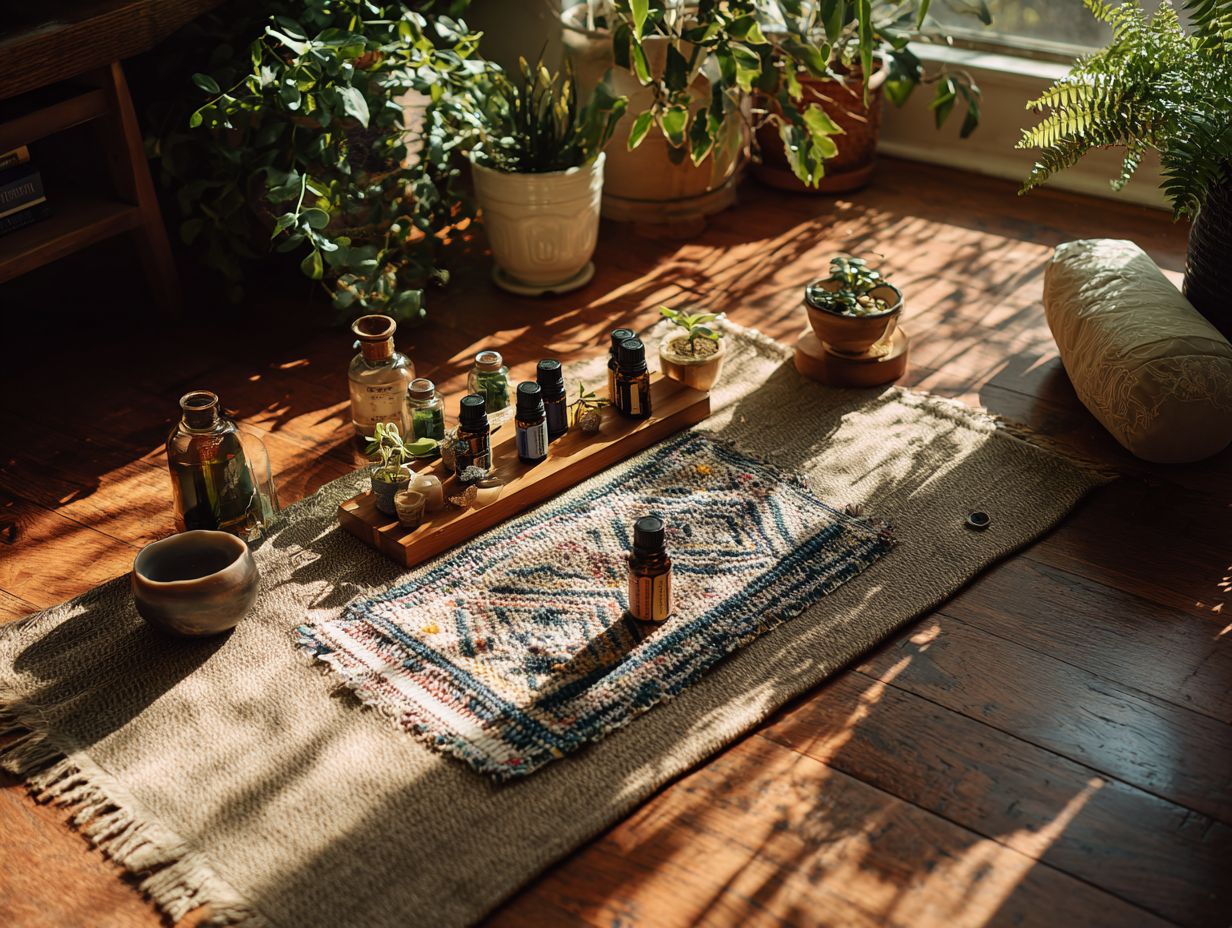
Natural remedies include a variety of holistic practices and products, such as herbal supplements and essential oils, which can significantly enhance one’s meditation experience. For instance, incorporating lavender essential oil can help reduce stress and foster a calming environment that is ideal for meditation.
Herbal supplements, like ashwagandha and chamomile tea, have also gained popularity due to their proven ability to lower anxiety and improve focus. A survey conducted in 2023 found that over 30% of adults utilize these natural remedies each year, indicating a growing trend towards holistic health practices.
By integrating these tools into a regular routine, individuals can enhance their meditation practice, resulting in a more profound and centered experience.
Herbal Supplements
Herbal supplements such as chamomile and lavender offer calming effects that can greatly enhance meditation practices.
They promote relaxation and help reduce anxiety, making them valuable additions to one’s meditation routine.
Chamomile and Herbal Teas
Chamomile, recognized for its calming properties, can be enjoyed as a tea or herbal infusion, or utilized in essential oil form to foster relaxation during meditation.
To fully harness its benefits, one can prepare a cup of chamomile tea by steeping either a tea bag or a tablespoon of dried flowers in hot water for approximately five minutes.
It is advisable to savor this soothing beverage about 30 minutes prior to your meditation session, as it may help alleviate anxiety and improve focus.
Additionally, chamomile essential oil can be used in a diffuser or diluted with a carrier oil to create a calming aroma, thus establishing a serene atmosphere that promotes deep relaxation throughout your practice.
Lavender
Lavender essential oil is well known for its soothing properties and can be both diffused and applied topically to enhance the ambiance during meditation. Used in aromatherapy, lavender is supported by research indicating its effectiveness in stress management in reducing anxiety and improving sleep quality.
To make the most of these benefits, simply mix five drops of lavender oil into a diffuser filled with water. This combination creates a calming atmosphere, perfect for unwinding after a busy day.
You might also consider adding a few drops to your bath for a relaxing soak or applying a diluted solution to pulse points for tranquility on the go. These straightforward methods make it easy to incorporate lavender into your daily routine.
Aromatherapy
Aromatherapy employs essential oils to enrich the meditation experience. By creating a calming atmosphere, it fosters both relaxation and focus, allowing individuals to engage more deeply in their practice.
Essential Oils for Meditation
Essential oils such as sandalwood and bergamot are particularly advantageous for meditation, offering distinct properties that promote mindfulness and tranquility.
Sandalwood oil is renowned for its grounding effects, making it an excellent choice for a personal inhaler that one can carry for relaxation on the go. On the other hand, bergamot oil, with its uplifting aroma, is effective in a diffuser, helping to create a calming atmosphere during meditation sessions. Additionally, lavender oil can be incorporated into a warm bath to further enhance your relaxation practice.
It may be worthwhile to experiment with blends, such as combining two drops of sandalwood with one drop of bergamot, to personalize your experience and discover what resonates most with you.
Diffusion Techniques
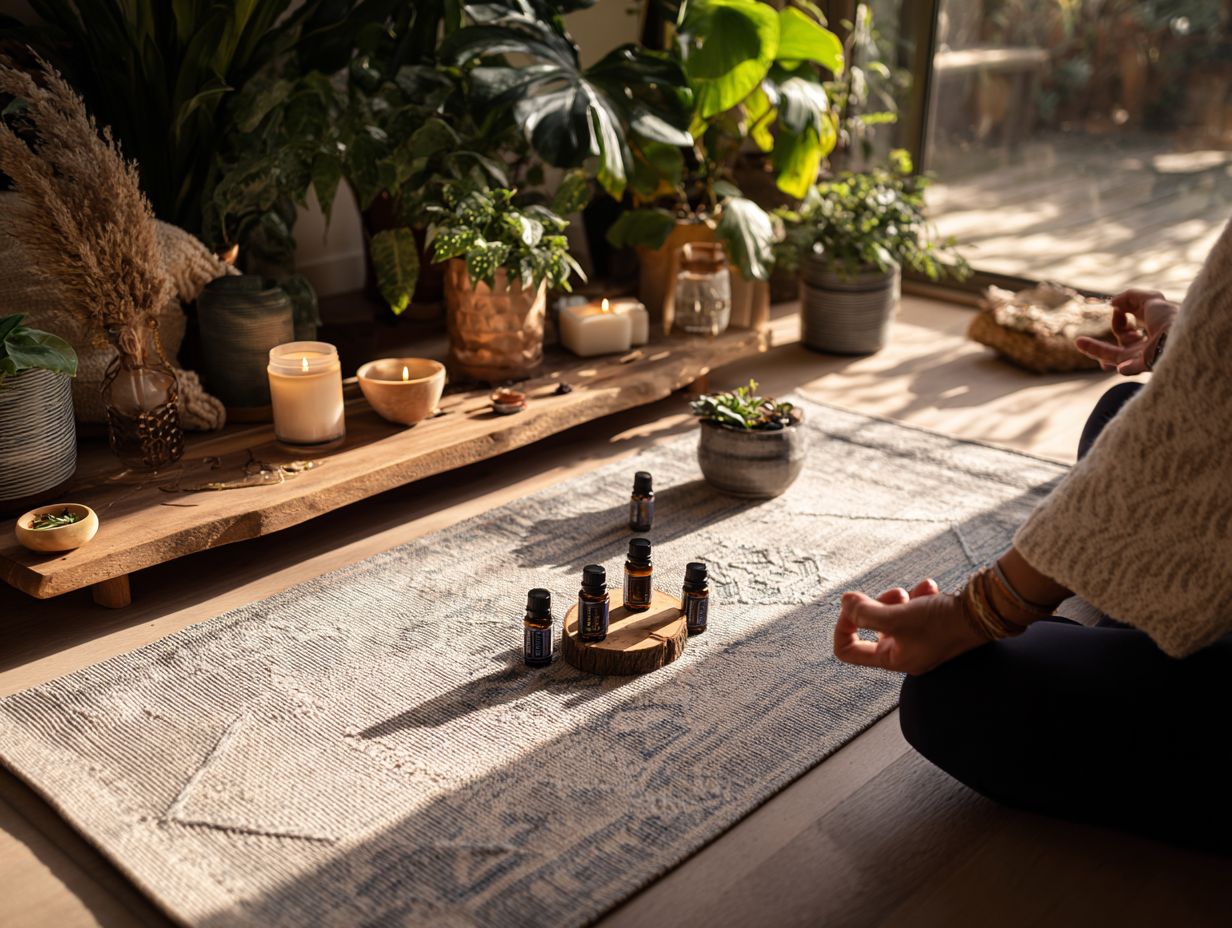
Effective diffusion techniques, such as using a ceramic diffuser or an ultrasonic diffuser, can significantly enhance the meditation experience by dispersing essential oils throughout the space.
To set up an ultrasonic diffuser, begin by filling the water reservoir with room temperature water, ensuring there is enough space left for the essential oils. Then, add 5 to 10 drops of your selected essential oil to create the desired atmosphere-lavender for relaxation or eucalyptus for clarity can be excellent choices.
Once you have added the oils, plug in the diffuser and select the mist intensity to ensure the fragrance is distributed evenly. It is advisable to run the diffuser for about 30 minutes prior to your meditation session, allowing the calming scents to fill the space.
Additionally, regularly cleaning the diffuser is essential to maintain its effectiveness and prevent any buildup that may affect performance.
Mindful Nutrition
Mindful nutrition, which emphasizes foods that promote calmness, can effectively complement meditation practices.
By supporting overall mental clarity and emotional balance, this approach to eating can enhance the benefits of meditation.
Foods that Enhance Calmness
Incorporating foods that are rich in omega-3 fatty acids, such as walnuts and salmon, can significantly enhance calmness and support emotional resilience and contribute to a more successful meditation experience.
To further support stress relief and mental clarity, it is beneficial to add leafy greens, blueberries, and dark chocolate to your diet.
- Leafy greens like spinach are particularly high in magnesium, which helps to calm the nervous system.
- Blueberries are packed with antioxidants that may assist in reducing stress hormones.
- Dark chocolate-especially varieties containing over 70% cocoa-can elevate serotonin levels.
A simple and enjoyable snack idea is to combine walnuts and dark chocolate. Mixing cup of chopped walnuts with 1 ounce of dark chocolate creates a delicious treat that nourishes both the mind and body.
Hydration and Meditation
Staying properly hydrated can significantly enhance focus and relaxation during meditation. It is generally recommended to consume at least 2 liters of water daily to support optimal brain function.
Incorporating hydration into your meditation routine can be both simple and enjoyable, enhancing cognitive benefits and emotional balance. For instance, infusing your water with citrus fruits like lemon or lime can enhance its flavor, making it more appealing to drink throughout the day.
Research has shown that even mild dehydration can impair cognitive performance, leading to difficulties in concentration and clarity. To effectively track your water intake, you might want to consider using hydration apps such as WaterMinder or Hydro Coach. These apps can serve as helpful reminders to drink water and log your progress.
By prioritizing hydration, you’ll create a more favorable environment for mindfulness and elevate your meditation experience.
Breathing Techniques and Emotional Release
Incorporating specific breathing techniques, like pranayama, can enhance your meditation practice by encouraging relaxation and improving focus.
Pranayama Practices
Various pranayama techniques, such as Nadi Shodhana, or alternate nostril breathing, can be quite effective for balancing energy and enhancing mindfulness during meditation.
To practice Nadi Shodhana, consider following these steps:
- Begin by sitting comfortably, ensuring that your spine is straight.
- Close your right nostril with your right thumb and inhale slowly through your left nostril for a count of four.
- Next, close the left nostril using your ring finger, release the right nostril, and exhale through it for a count of four.
- After that, inhale through the right nostril for a count of four, close it, and exhale through the left nostril.
- Continue this cycle for 5-10 minutes, as it can help foster a sense of calm and enhance focus during your meditation practice.
Benefits of Deep Breathing
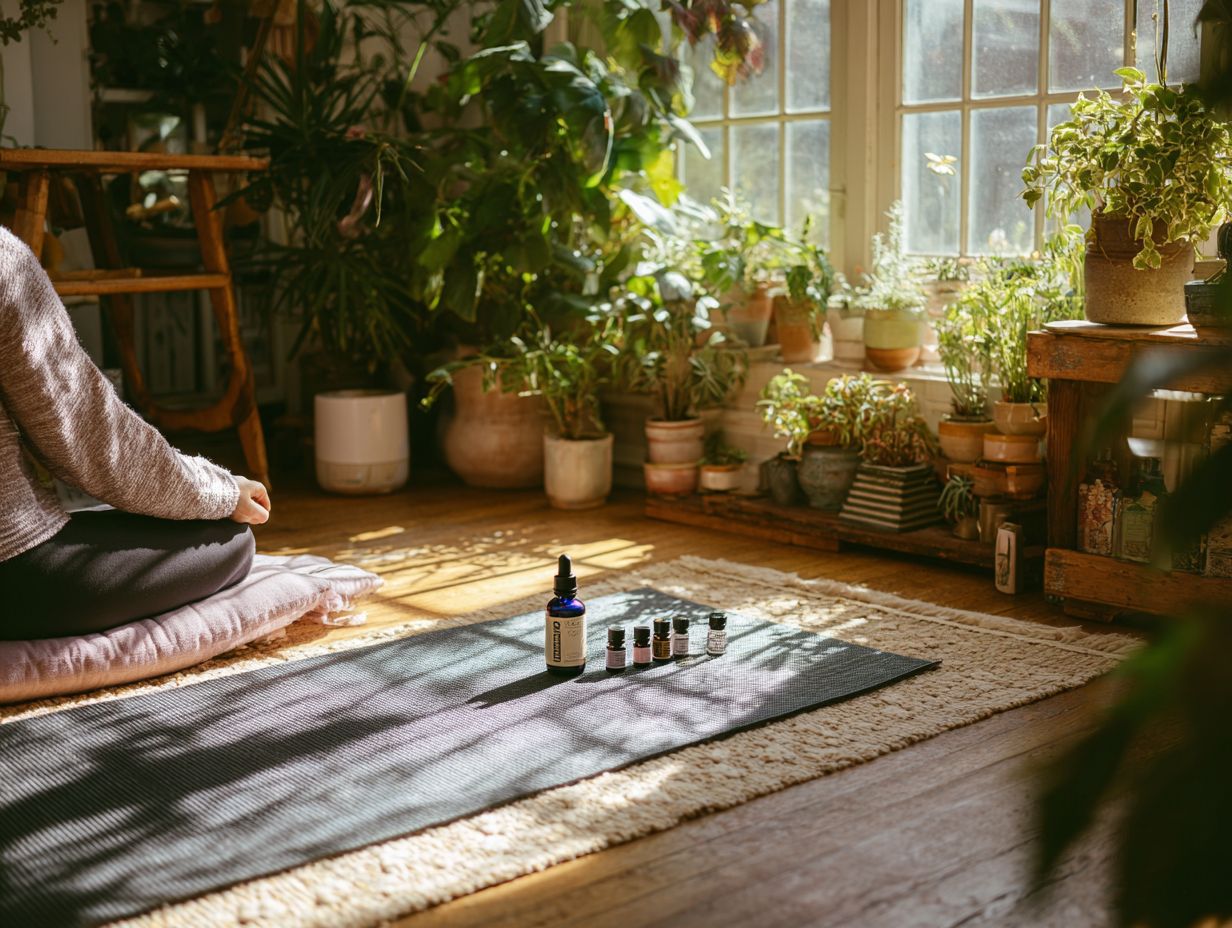
Deep breathing techniques have been shown to reduce stress levels by as much as 40%, which can greatly enhance emotional well-being, inner peace, and focus during meditation. When you incorporate deep breathing into your meditation sessions, you can significantly amplify the benefits.
One effective method to try is the 4-7-8 breathing pattern. Begin by inhaling through your nose for a count of four, then hold your breath for seven counts, and finally exhale slowly through your mouth for a count of eight.
Repeat this cycle four to six times. This practice not only calms the nervous system but also helps sharpen your focus. It’s advisable to set aside ten minutes each day to integrate this breathing pattern into your routine, gradually increasing the duration as you become more comfortable with the practice.
Physical Movement
Physical movement, especially through practices like yoga, gentle stretching, and grounding exercises, enhances meditation by fostering body awareness, promoting relaxation, and supporting the mind-body connection.
Yoga and Meditation for Holistic Lifestyle
Practicing yoga poses such as Child’s Pose and Corpse Pose can significantly enhance meditation sessions by releasing tension and fostering a sense of calm and spiritual growth.
To create a beginner-friendly sequence, it is advisable to start with Cat-Cow to gently warm up the spine, performing this for about a minute. After that, transitioning into Downward Facing Dog for another minute will help stretch the hamstrings and soothe the mind. Following this, Child’s Pose allows for deep breaths, helping to center your focus.
Finally, practicing Corpse Pose for 5-10 minutes encourages total relaxation and mental relaxation. This sequence, which totals approximately 15-20 minutes, lays a peaceful foundation for deeper meditation, ultimately enhancing both focus and mindfulness, promoting stress relief strategies.
Gentle Stretching for Relaxation Techniques
Incorporating gentle stretching before meditation can significantly enhance body awareness and alleviate built-up tension, leading to a deeper meditative experience and encouraging effective meditation.
- To begin, start with a neck stretch: slowly tilt your head to one side, holding the position for about 10-15 seconds before switching to the other side. This can enhance your breathing exercises.
- Next, proceed with shoulder rolls, moving in a circular motion for approximately one minute, aiding in anxiety reduction.
- After that, try a seated forward bend, reaching towards your toes while taking deep breaths for 15-20 seconds, incorporating relaxation music.
- Finally, conclude with a seated side stretch by extending one arm overhead and leaning to the opposite side, promoting emotional wellbeing.
This simple routine, which takes only 5-10 minutes, serves to improve flexibility and focus, allowing you to be more present during your meditation practice and promotes enhanced focus and self-care.
Integrating Remedies and Healing Practices into Practice
To effectively incorporate natural remedies and holistic therapies into your meditation practice, it is advisable to experiment with various combinations and make adjustments based on your individual needs and preferences, thus fostering spiritual wellness.
You might start by integrating herbal supplements, such as chamomile or passionflower, which are known to promote relaxation and support nervous system support. Additionally, creating a calming atmosphere can be achieved by diffusing essential oils like lavender or cedarwood during your meditation sessions while enjoying ambient music.
Consider establishing a weekly schedule where you meditate for 15 minutes each morning while enjoying chamomile tea, followed by 10 minutes of deep breathing with lavender oil, incorporating positive affirmations and visualization techniques. Throughout the week, take some time to evaluate how you feel and adjust the dosages or oils as needed.
This personalized approach can significantly enhance your mindfulness experience while supporting your overall well-being, promoting personal growth and self-discovery.
Frequently Asked Questions
What are some natural remedies and therapeutic practices that can enhance my meditation practice?
Some natural remedies that complement meditation practice include herbal supplements, essential oils, crystals, acupuncture, and sound healing.
How can herbal supplements and energy alignment benefit my meditation practice?
Herbal supplements such as ashwagandha, valerian root, and passionflower can help reduce stress and promote relaxation, making it easier to enter a meditative state and support inner stillness.
Which essential oils and flower essences are best for meditation?
Lavender, frankincense, and sandalwood are commonly used essential oils for meditation as they have calming and grounding properties, aiding in consciousness and a peaceful mindset.
What role do crystals and meditative state play in meditation?
Crystals are believed to have their own unique energetic properties that can help enhance and deepen meditation practice. For example, amethyst is known for its calming and spiritual qualities, promoting emotional intelligence and energy healing.
How does acupuncture and energy alignment complement meditation practice?
Acupuncture can help balance the body’s energy and promote relaxation, making it easier to enter a meditative state and support chi or qi energy. It may also help alleviate physical and emotional issues that could be hindering meditation, enhancing emotional healing.
Are there any side effects to using natural remedies and restorative practices while meditating?
In general, natural remedies are safe and well-tolerated, supporting wellness and healthy habits. However, it is important to consult with a healthcare professional before incorporating them into your meditation practice, especially if you are pregnant, breastfeeding, or have any pre-existing conditions or take medications. This ensures your practice remains focused on self-reflection and relaxation techniques.