
Imagine finding peace and tranquility in every step you take. Thch Nht Hnh, a beloved Zen master, shows us how to weave mindfulness into our daily lives. His teachings on compassion, interconnectedness, and the art of walking meditation invite us to explore deeper connections with ourselves, nature, and the world. In this spiritual journey, we’ll uncover the essence of living in the moment and embracing change. Ready to discover how peace can transform your everyday life? Let’s dive in!
Biography and Influence
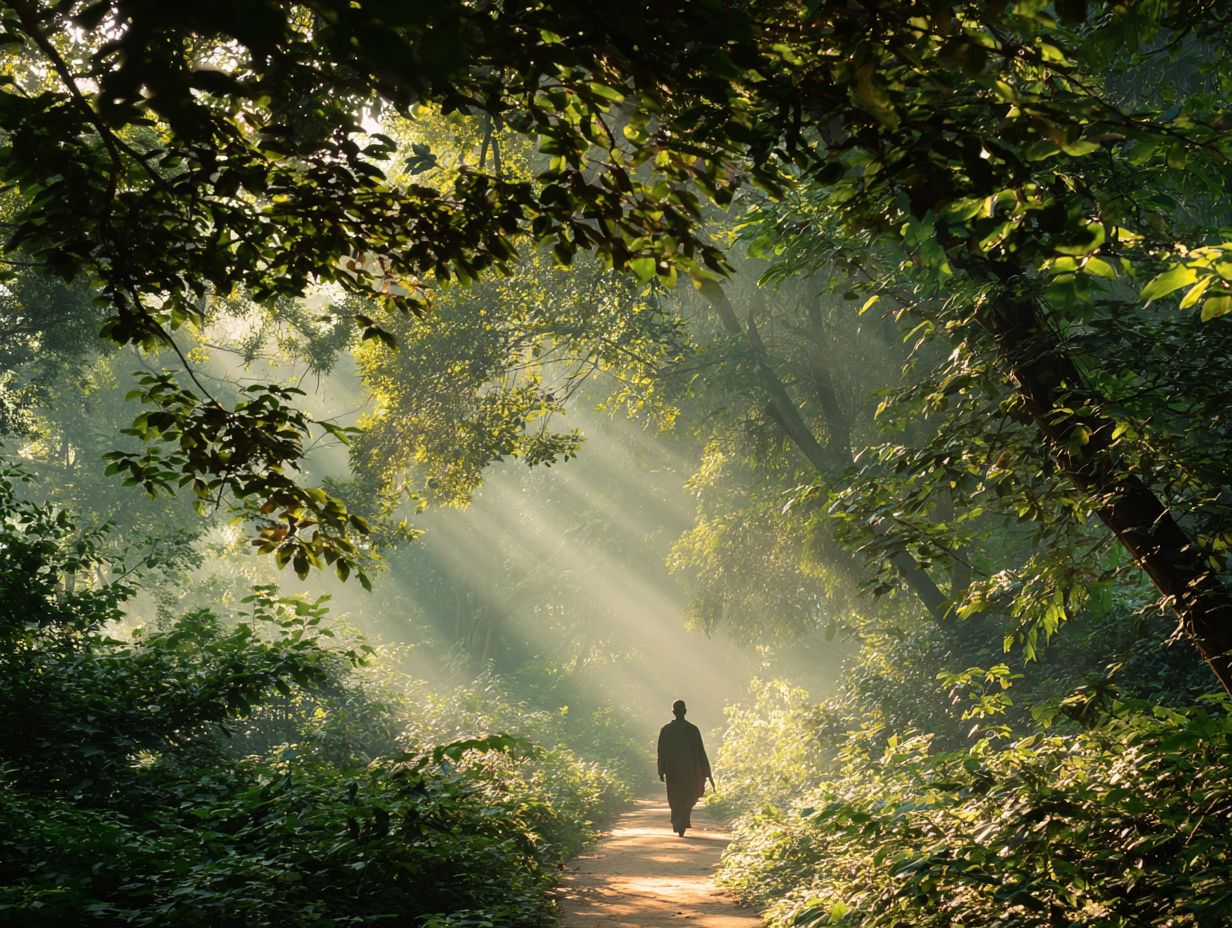
Born in Vietnam in 1926, Thch Nht Hnh embarked on a remarkable journey that transformed from a monastic life into a global advocacy for peace, reshaping the landscape of spirituality. Ordained as a monk at the age of 16, he committed himself to the promotion of mindfulness, compassion, and love.
During the tumultuous period of the Vietnam War, he founded the “Engaged Buddhism” movement, which focused on advocacy for peace and reconciliation. He is well-known for his powerful statement, “There is no way to peace; peace is the way.”
In 1982, he established the Plum Village community in France, creating a sanctuary where mindful living and spiritual teachings could flourish. His teachings highlight the significance of present-moment awareness, inspiring millions around the world to adopt mindfulness as a means of personal and societal healing.
Core Teachings Overview
At the core of Thch Nht Hnh’s teachings is the practice of mindfulness, which emphasizes presence, awareness, and the interconnectedness of all things. To cultivate mindfulness in your daily life, you might consider incorporating simple practices such as mindful breathing or walking.
One effective way to begin your day is to spend five minutes on deep breathing. Focus on each inhale and exhale to help ground yourself in the present moment and foster inner peace. When you encounter stressful situations, taking a brief walk can be beneficial. During this walk, pay attention to the sensations of your feet touching the ground and the various sounds in your environment.
Additionally, setting aside time for a daily gratitude journal can be quite rewarding and promote emotional well-being. Aim to note three things you appreciate each day. This regular practice can help reinforce your awareness and compassion in daily interactions, fostering a deeper connection with yourself and those around you.
The Concept of Mindfulness
Mindfulness, as articulated by Thch Nht Hnh, refers to the practice of being fully present and engaged in the moment. This approach fosters a deeper self-awareness and enhances one’s sense of joy.
Definition and Importance
Mindfulness is the psychological process of directing one’s attention to the present moment, and it has been shown to decrease stress while increasing happiness and clarity.
Research indicates that practicing mindfulness can significantly enhance mental health. A study published in `JAMA Internal Medicine’ revealed that mindfulness meditation effectively reduces anxiety, depression, and pain.
Plus its benefits for mental health, mindfulness also boosts productivity. For example, Google’s mindfulness programs, such as `Search Inside Yourself,’ have demonstrated improvements in employee focus and resilience.
Engaging regularly in mindfulness practices, like daily meditation or mindful breathing exercises, promotes emotional well-being, self-awareness, and helps individuals feel more grounded. Ultimately, this leads to improved decision-making and better management of relationships.
Mindfulness in Daily Life
Incorporating mindfulness into daily life can be achieved through simple practices, such as mindful breathing and conscious eating. One effective method for practicing mindfulness is the 5-4-3-2-1 grounding technique. To begin, find a quiet space and take a moment to observe your surroundings.
- Start by identifying five things you can see,
- then move on to four things you can touch,
- followed by three things you can hear,
- two things you can smell,
- and finally one thing you can taste.
This exercise serves as a valuable tool to anchor yourself in the present moment.
During your commute, you might focus on your breath: inhale deeply for four counts, hold for four, and exhale for six. By incorporating such practices into your daily routine, you can promote a sense of calm and heightened awareness, enhancing your overall well-being and serenity.
Peace and Compassion

Thch Nht Hnh emphasizes that genuine peace comes from compassion, which is grounded in the understanding of our interconnectedness with all beings and the philosophy of non-attachment.
This perspective invites us to recognize how deeply we are all linked, fostering a sense of empathy and care for one another.
Interconnectedness of All Beings
Understanding the interconnectedness of all beings is crucial for nurturing compassion and empathy in our interactions, promoting peace-building and conscious choices. This principle, referred to in Buddhism as interbeing, highlights the profound impact our actions can have on others.
For example, during the civil rights movement, influential leaders like Martin Luther King Jr. illuminated the shared experiences of injustice, encouraging people to recognize their common humanity. In a similar vein, organizations that address climate change underscore how environmental degradation disproportionately affects marginalized communities around the globe.
By acknowledging these connections, individuals can develop a sense of compassion that motivates social change. This can lead to initiatives such as community gardens, which not only provide food but also bring together diverse groups around common goals.
Practicing Compassion
Practicing compassion can be cultivated through various exercises, such as loving-kindness meditation, which enhances emotional intelligence, self-reflection, and improves relationships.
One particularly effective approach is the Metta Bhavana meditation. In this practice, you silently repeat phrases that express goodwill towards yourself and others. You start by focusing on yourself and then gradually extend your wishes to loved ones, acquaintances, and even individuals with whom you may have conflicts.
Research shows that individuals who engage in this type of meditation experience a notable 23% increase in emotional well-being, along with improved relationships. Additionally, volunteering is another valuable method that has demonstrated the ability to enhance community bonds and increase empathy.
By actively participating in these practices, you can foster a more compassionate mindset and strengthen your connections with others.
The Practice of Walking Meditation
Walking meditation is an effective mindfulness practice that integrates movement with breath awareness, thereby strengthening the connection between the mind and body and fostering a sense of stillness in action.
This technique encourages individuals to cultivate a deeper sense of presence and clarity as they engage in both physical activity and mindful breathing.
Steps to Effective Walking Meditation
To practice walking meditation, it is helpful to follow a few straightforward steps.
- First, find a quiet space where you can focus without distractions.
- Begin by centering your attention on your breath, then synchronize your steps with your inhalations and exhalations.
- Start by standing tall, with your feet hip-width apart and your weight evenly distributed.
- As you breathe in, take a small step forward, paying attention to the sensation of the ground beneath you.
- It is important to maintain a slow, deliberate pace; aim for approximately three steps per breath.
- To enhance your experience, consider practicing in a natural setting, such as a park, where you can observe your surroundings and connect with nature.
- You may also find it beneficial to use a timer set for 10 to 15 minutes initially, gradually increasing the duration as you become more comfortable with the practice.
Benefits of Walking Meditation

Walking meditation presents a variety of benefits, such as reduced anxiety, improved focus, and enhanced overall well-being. Research indicates that individuals who engage in walking meditation report a remarkable 30% decrease in stress levels after consistent practice. Additionally, the moderate exercise involved offers cardiovascular benefits.
To begin your practice, it is advisable to select a quiet and pleasant route where you can walk without interruptions, promoting relaxation and present awareness. Start by concentrating on your breath, gradually connecting each inhale and exhale with your steps.
Utilizing apps like Insight Timer or Calm can offer guided sessions that support mindfulness. Many regular participants observe enhanced clarity and emotional resilience as significant long-term benefits of their practice.
Embracing Impermanence
Embracing impermanence is essential for cultivating resilience and acceptance in life, as it prompts us to appreciate each moment in its entirety and fosters a sense of understanding and adaptability.
By acknowledging the transient nature of experiences, we can learn to value what we have right now and navigate life’s changes with a greater sense of understanding and adaptability.
Understanding Change
Understanding that change is a fundamental aspect of life enables individuals to face challenges with an attitude of acceptance, personal growth, and transformation. Thch Nht Hnh, a revered Buddhist teacher, often highlighted the beauty of transformation. He famously expressed, “No mud, no lotus,” which emphasizes that challenges can lead to the development of inner strength.
To cultivate resilience, individuals may explore various methods such as:
- Mindfulness meditation, which helps enhance self-awareness
- Journaling to reflect on emotions and track personal progress
Additionally, participating in community support groups can strengthen the sense of belonging, allowing people to navigate their personal transformations collectively. By embracing these strategies and the intention to cultivate peace, one can develop a more positive outlook on the inevitable changes that life presents.
Living in the Present Moment with Joyfulness
Living in the present moment with mindful awareness requires us to intentionally redirect our focus away from past regrets or future anxieties. One effective approach to fostering present-moment awareness is to set reminders on your phone to pause and take deep breaths several times throughout the day.
For example, taking just one minute every hour to concentrate solely on your breathing can be quite beneficial.
This spiritual practice can lead to a significant reduction in stress levels and improve emotional regulation. It may also be worthwhile to consider mindfulness activities such as meditation or yoga, as these practices help anchor your awareness in the present, promoting a sense of calm and enhancing overall mental well-being through Zen teachings.
Applying Lessons in Everyday Life with Existential Awareness
Implementing lessons from Thch Nht Hnh offers a wonderful opportunity to transform everyday activities into moments of mindfulness, clarity, and self-discovery.
Incorporating mindfulness into daily life can be achieved through simple practices. For instance, when cooking, one can focus on the colors, textures, and aromas of the ingredients. This sensory engagement can elevate meal preparation into a calming ritual that promotes holistic living and intentionality.
During commutes, consider replacing the usual rush with mindful breathing-pay attention to your breath and the sensations around you, whether you are driving or using public transportation. This practice encourages spiritual awakening and acceptance of self.
Additionally, setting aside a few moments each day for mindful walking, where you concentrate on each step and your surroundings, can significantly enhance overall well-being and awareness of breathing.
Continuing the Journey of Peace through Mindful Awareness

Continuing the journey toward peace necessitates a commitment to mindfulness practices and the cultivation of compassion in every facet of life. To deepen your mindfulness and consciousness, it may be helpful to consider integrating the following practices into your daily routine:
- Begin each morning with five minutes of focused breathing, gradually increasing the duration as you become more comfortable. This helps nurture the joy of living and equanimity.
- Exploring books by Thch Nht Hnh, such as “The Miracle of Mindfulness,” can provide valuable insights and techniques to enhance your practice, encouraging wisdom and non-judgment.
- Participating in local workshops or classes can foster a sense of community support and motivation, promoting nurturing relationships and leading with love.
- Utilizing apps like Headspace or Calm can offer guided meditations, helping you maintain consistency and engagement in your mindfulness journey by cultivating peace and balance.
Frequently Asked Questions
What is the meaning behind the title “Peace Is Every Step: Lessons from Thch Nht Hnh” through Spiritual Practice?
The title refers to the idea that peace is not a distant goal to be achieved, but rather a path that we can cultivate in our everyday actions and interactions. Thch Nht Hnh teaches us that peace is available to us in each moment, and we can find it by being mindful, embracing simplicity, and present in our daily lives.
Who is Thch Nht Hnh and why is he considered a spiritual leader?
Thch Nht Hnh is a Vietnamese Buddhist monk and peace activist who has dedicated his life to teaching mindfulness and promoting peace and reconciliation. He is widely known for his teachings on Engaged Buddhism, and his peaceful activism during the Vietnam War. His wisdom and compassion have inspired millions and earned him the respect and admiration of people from all walks of life.
What are some of the key lessons that we can learn from Thch Nht Hnh’s teachings in “Peace Is Every Step” regarding Suffering and Non-Violence?
There are many valuable lessons in this book, but some of the key ones include the power of mindfulness and living in the present moment, the importance of compassion and understanding towards ourselves and others, and the transformative effects of deep listening and loving speech. Thch Nht Hnh also teaches us about the interconnectedness of all beings and the concept of interbeing, guiding us towards liberation and harmony.
How does Thch Nht Hnh define peace and what does it look like in practice through Spiritual Awakening?
According to Thch Nht Hnh, peace is not just the absence of war or conflict, but also the presence of understanding, love, and compassion. In practice, it looks like being fully present and attentive in our daily activities, cultivating inner peace through meditation and mindfulness, experiencing peaceful coexistence, and practicing loving-kindness and forgiveness towards others.
Can people of any religion or belief system benefit from Thch Nht Hnh’s teachings on Authenticity?
Absolutely. Thch Nht Hnh’s teachings are not limited to any particular religion or belief system. They are based on universal principles of mindfulness, compassion, and interconnection that can be applied by anyone, regardless of their religious or spiritual background. His messages of peace, positive energy, and understanding are relevant and valuable to people of all faiths or no faith at all.
What are some practical ways that we can incorporate Thch Nht Hnh’s teachings into our daily lives through Mindful Eating?
Thch Nht Hnh offers many practical suggestions in his book, such as mindful breathing, walking meditation, and eating mindfully. Other ways to incorporate his teachings include practicing deep listening and loving speech in our relationships, cultivating gratitude and compassion in action, and finding moments of peace and mindfulness in our daily routines, trusting the process of self-care and letting go.